

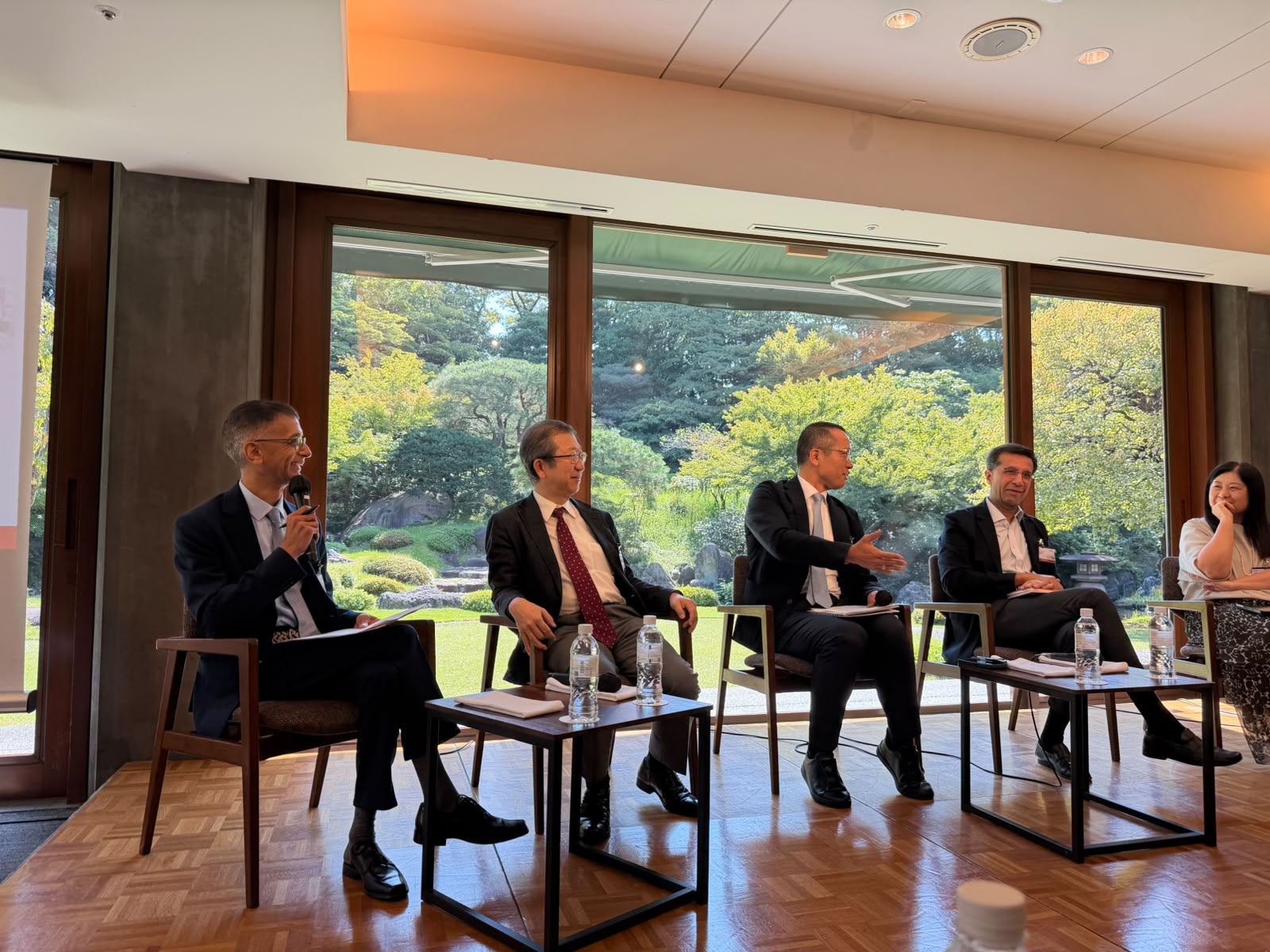
New Delhi, October 9, 2026: The Iron Pillar Initiative in Global Learning (IGL) at Ashoka University, in partnership with Iron Pillar, has launched the “India–Japan Economic Corridor: Technology, Finance, and the Future of the Indo-Pacific” report, examining the potential for a deeper economic corridor between the two countries. The report was unveiled at the International House of Japan in Tokyo, with around 60 policymakers, investors, diplomats, academics, and entrepreneurs from India and Japan attending the event.
The launch follows the 16th India–Japan Annual Summit held in July 2026, where both nations reaffirmed a target of ¥10 trillion in Japanese private-sector investment in India by 2035. Despite this, the report notes that Japan currently sources less than 1% of its imports from India, and India accounts for about 4% of Japan’s outbound investment, highlighting the gap between strategic and economic ties.
Key contributors and report findings
The report compiles 27 independent perspectives from policymakers, academics, investors, entrepreneurs, and industry leaders, including Anand Prasanna, Managing Partner, Iron Pillar; Archish Mittal, Vice President, Iron Pillar; Ashish Dhawan, Founding Chairperson, Board of Trustees, Ashoka University; Prof. K. VijayRaghavan, Chair, Science Advisory Council, Ashoka University and Former Principal Scientific Adviser to the Government of India; Dr. Prachi Mishra, Dean, Ashoka School of Economics (RJSEF), Director and Head of Ashoka Isaac Center for Public Policy (ICPP); and Dr. Henrik Syse, Norwegian philosopher and Vice Chair, Scandinavia Japan Sasakawa Foundation. The foreword is authored by Nobel Laureate Michael A. Spence, Dean Emeritus, Stanford Graduate School of Business.
The report traces the evolution of India–Japan relations from development finance and manufacturing to a broader economic partnership, identifying opportunities in finance, technology, supply chains, innovation, and talent. It covers topics such as private capital, semiconductors, AI, deep tech, space, and workforce mobility.
Event highlights and new institutional partnership
Anand Prasanna and Archish Mittal of Iron Pillar delivered the welcome address, outlining the vision to move beyond strategic ties to deeper economic integration. Dr. Henrik Syse delivered the keynote, emphasizing international cooperation and cross-border engagement. The event also marked the announcement of a partnership between the Asian Development Bank Institute (ADBI) and Ashoka University to strengthen institutional engagement between India and Japan.
Complementary strengths and recommendations
The report argues that Japan brings capital, technology, and industrial expertise, while India offers a young workforce, growth potential, and demand for capital. It stresses that capital alone is insufficient, calling for stronger intermediaries, greater talent mobility, mechanisms to track delivery, and increased institutional predictability. A central finding is the need to address the “missing middle” between government frameworks and large corporate engagements, highlighting the role of fund managers, intermediaries, startups, and mid-sized suppliers.
Technology is identified as a significant area for collaboration, with the report suggesting that Japan’s manufacturing strengths can be combined with India’s capabilities in AI, digital technologies, and entrepreneurship. The importance of two-way talent mobility, including students, researchers, skilled professionals, and entrepreneurs, is also emphasized.
Statements from initiative leaders
Archish Mittal, Vice-President, Iron Pillar, and Co-Chair, Iron Pillar Initiative in Global Learning, Ashoka University, said the report aims to move the India–Japan relationship from intent to sustained engagement by building institutional and economic connections across capital, technology, and talent.
Prof. K. VijayRaghavan, Chair, Science Advisory Council, Ashoka University, and Co-Chair, Iron Pillar Initiative in Global Learning, highlighted the complementary strengths of both countries and the need for stronger pathways for researchers, businesses, investors, and young talent to collaborate.
About the Iron Pillar Initiative in Global Learning
The Iron Pillar Initiative in Global Learning (IGL) was established by Ashoka University and Iron Pillar on September 28, 2026, to foster sustained relationships among scholars, institutions, practitioners, and students. IGL aims to facilitate research, internships, international learning, and cross-border intellectual exchange, with the India–Japan Economic Corridor report as one of its first major outputs.
Disclaimer: This article is based on a press release provided by the concerned organisation and has been edited for style and clarity with the assistance of AI tools. BusinessFortnight does not verify, endorse, or take responsibility for the claims, figures, or statements made in the original release.

