

[ad_1]
Japan’s automotive industry has made steady progress in areas such as environmental initiatives, safety, and technological innovation. However, challenges continue to accumulate, and a model driven solely by competition among individual companies is no longer sufficient. The question now is whether the industry can maintain its global competitiveness under the current model.
At the same time, there is a growing need to remain responsive to rising geopolitical risks—including developments in the Middle East. Strengthening resilience in energy and supply chains will require collaboration not only within the automotive industry, but also across industries and between the public and private sectors.
From this perspective, it is no longer enough to define the goal simply as “the development of the automotive industry.” Instead, we must ask: What role can the automotive industry play in society? What kind of society can it help create?
To engage with society, we aim to advance large-scale initiatives all the way to societal implementation—seeing them through, not just discussing them.
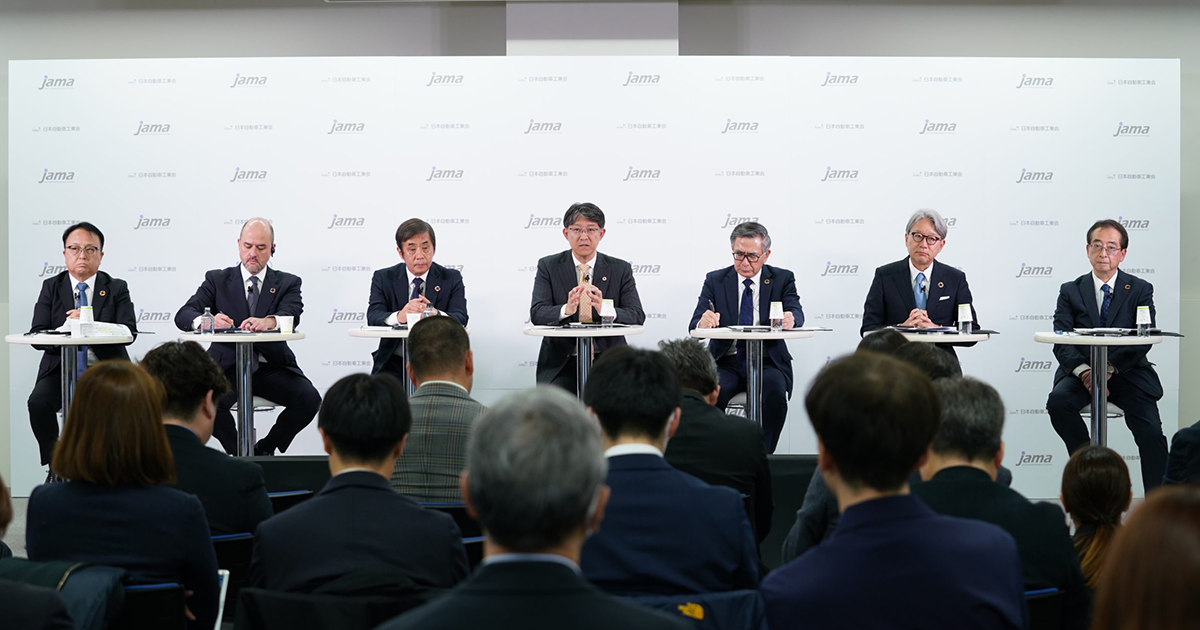
JAMA, comprising 14 major automakers, is a truly unique organization where companies across diverse mobility fields can collaborate toward a shared goal. This collective strength is a key driver of Japan’s future competitiveness.
[ad_2]
Source by [author_name]

