

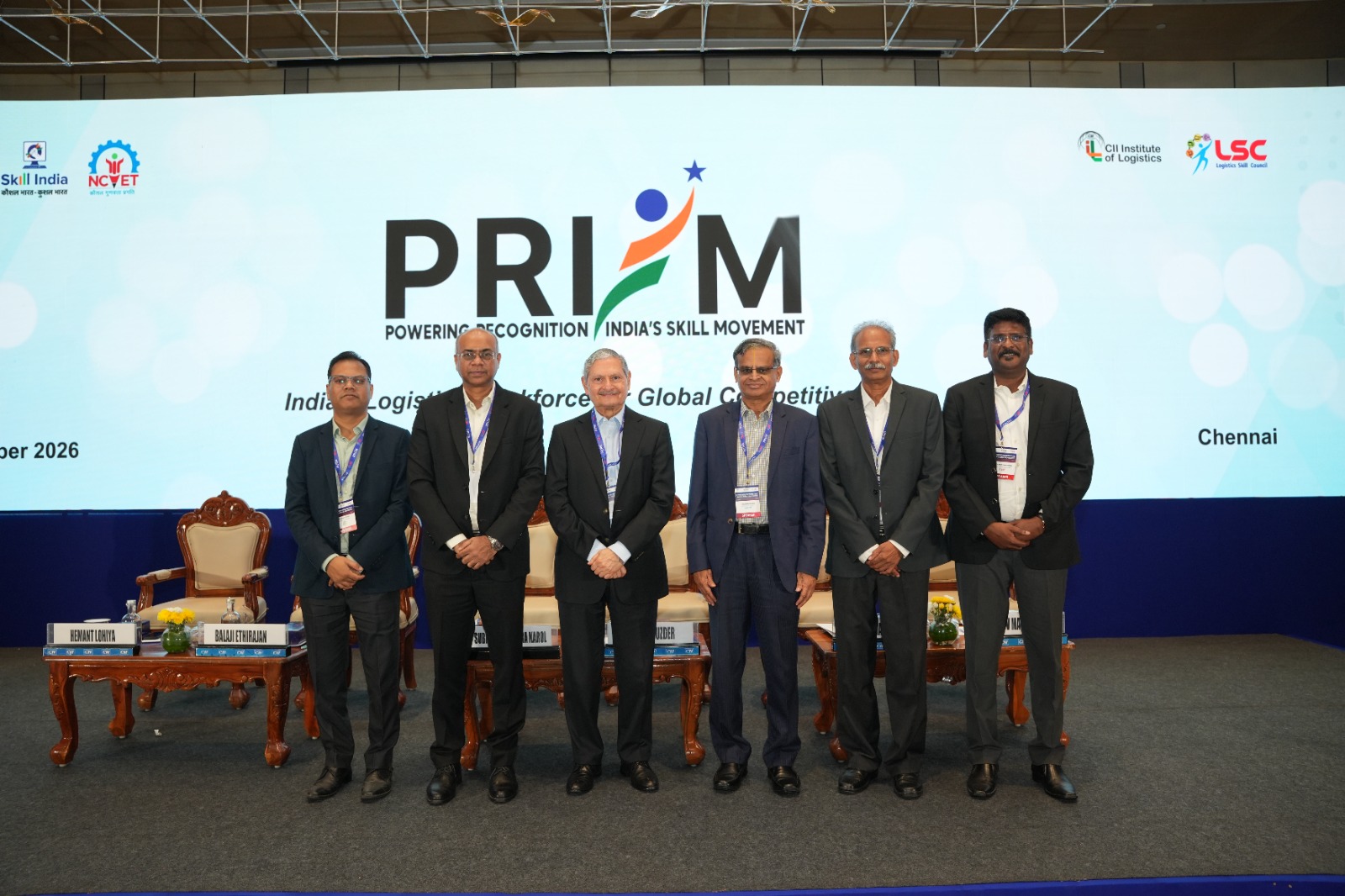
Chennai, October 9, 2026: The Logistics Sector Skill Council (LSC) convened PRISM 2026 – Powering Recognition: India’s Skill Movement, an industry connect meet in Chennai that gathered senior government officials, industry leaders, Sector Skill Council representatives, and education and training institutions to discuss the future of workforce development in India’s logistics sector.
Centred on the theme “India’s Logistics Workforce for Global Competitiveness,” the event addressed the evolving skill requirements and the need to build a workforce capable of adapting to technological advancements and the increasing integration of India’s logistics sector with global supply chains.
Industry leaders and government join forces
Key participants included Cyrus Guzder, Chairman, Logistics Sector Skill Council; S. Padmanabhan, Board Member, LSC and Director, Sattva Logistics Group; K. V. Mahidhar, Board Member, LSC and Executive Director and Head, CII Institute of Logistics; Ravikanth Yamarthy, CEO, LSC; Hemant Lohiya, Head – CSR, Redington Foundation; and Balaji Ethirajan, Global Chief Human Resources Officer, TVS Supply Chain Solutions.
Discussions highlighted the importance of collaboration between government, industry, and the skilling ecosystem to ensure workforce development keeps pace with the sector’s rapid transformation. Cyrus Guzder said the sector is being reshaped by technology, automation, digitalisation, and global integration, and emphasised the need to build a workforce that is employable, adaptable, and capable of meeting global standards.
Sessions address technology and skill gaps
The programme featured sessions such as “Building a Future-Ready Logistics Workforce – Skill Demand and Sector Transformation,” which examined the need to align training with emerging business and operational priorities. Another session, “Workforce 4.0,” explored the impact of artificial intelligence, automation, global mobility, and new career opportunities on the logistics talent landscape, stressing the importance of continuous upskilling and reskilling.
“The SSC Toolkit” session discussed how Sector Skill Councils can support industry through government schemes, policy incentives, and effective implementation mechanisms, with a focus on strengthening collaboration among industry, government, and training institutions to address skill gaps.
India’s WorldSkills success and PRISM Awards
India’s achievement at WorldSkills Shanghai 2026, where the country secured a Silver Medal in Logistics and Freight Forwarding, was highlighted as evidence of the global potential of Indian logistics talent. The discussions called for stronger industry participation in skills development through workplace exposure, apprenticeships, practical training, and industry-aligned curricula.
The event concluded with the PRISM Awards, recognising individuals, institutions, industry partners, and other stakeholders for their contributions to strengthening employability, encouraging innovation, and advancing workforce development in the logistics sector. S. Padmanabhan noted the need for industry to act as a partner in skilling, ensuring training is connected to workplace requirements and that logistics is seen as a sector offering long-term careers.
Emphasis on coordinated workforce development
PRISM 2026 reinforced the need for a coordinated approach to workforce development, with industry providing demand insights, government enabling policy, and the skilling ecosystem translating requirements into relevant qualifications and training programmes. The event also stressed the importance of establishing clear career pathways, encouraging lifelong learning, and equipping India’s logistics workforce to support expanding domestic and international requirements.
The Logistics Sector Skill Council works to strengthen the skills ecosystem for India’s logistics sector by promoting industry-aligned training, workforce development, and collaboration among stakeholders.
Disclaimer: This article is based on a press release provided by the concerned organisation and has been edited for style and clarity with the assistance of AI tools. BusinessFortnight does not verify, endorse, or take responsibility for the claims, figures, or statements made in the original release.

