

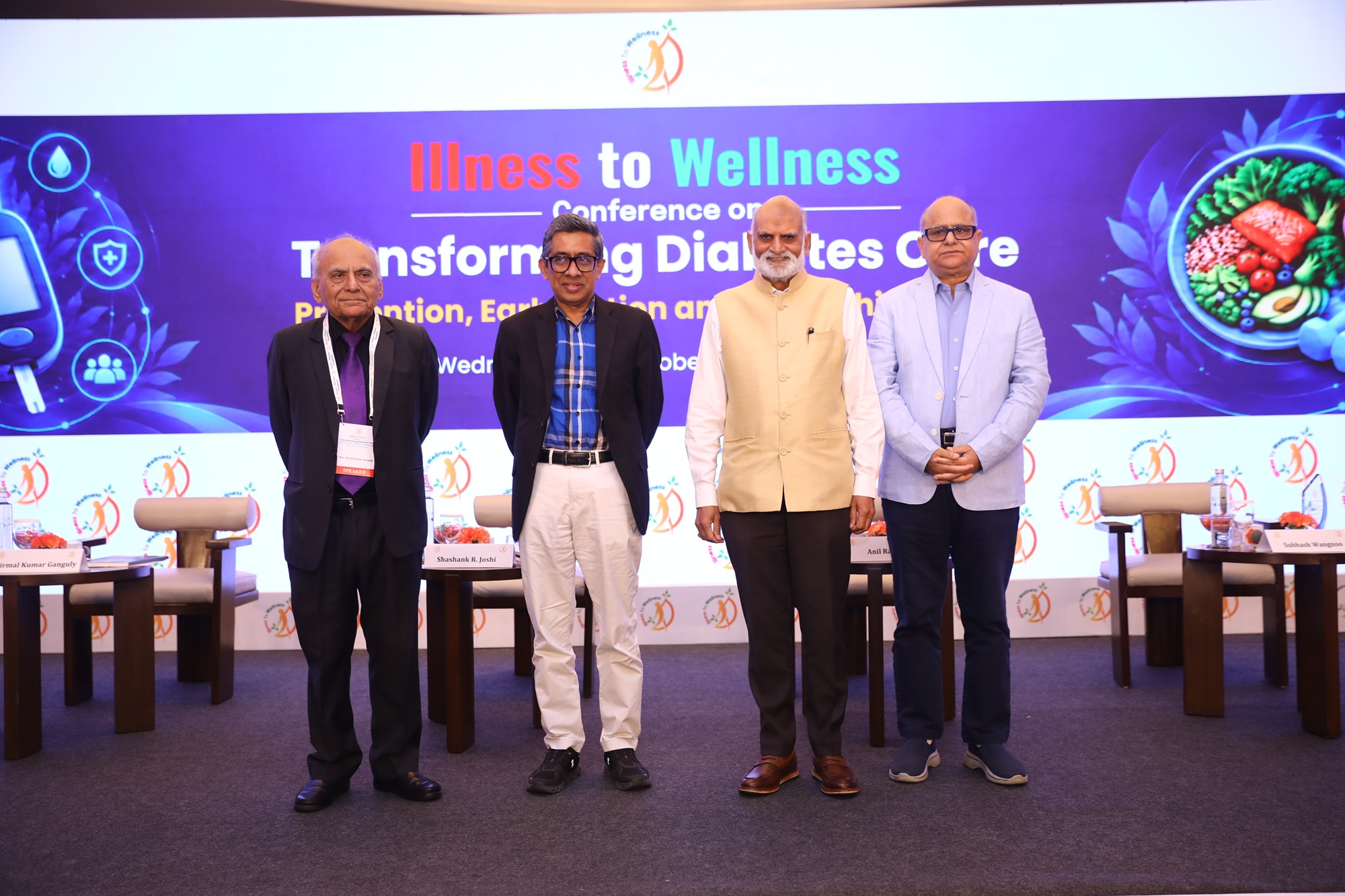
New Delhi, October 28, 2026: The Illness to Wellness Foundation convened a conference in New Delhi under the theme “Transforming Diabetes Care: Prevention, Early Action and a Healthier Future,” gathering healthcare experts and researchers to discuss strategies for early detection, timely treatment, and preventive healthcare to address India’s rising diabetes burden.
The event highlighted the need for accessible and affordable care, evidence-based lifestyle interventions, technological innovation, and increased public awareness to improve long-term outcomes for people with diabetes. Participants called for stronger policies, community engagement, and patient-centric approaches to ensure timely diagnosis and better management.
Expert perspectives on prevention and early action
Dr. Subhash Wangnoo, Senior Consultant and Head, Apollo Centre for Obesity, Diabetes and Endocrinology at Indraprastha Apollo Hospital, New Delhi, stressed that transforming diabetes care requires redesigning healthcare delivery so interventions reach individuals in a way that fits their lives. He emphasised that prevention, early diagnosis, and long-term management must extend beyond specialist clinics to include healthcare systems, community programmes, and primary care services.
Padma Shri Prof. (Dr.) Shashank R. Joshi, Consultant Endocrinologist at Lilavati Hospital, Sir H. N. Reliance Foundation Hospital, and Joshi Clinic, Mumbai, said that prevention and early detection should become standard practice, particularly through promoting healthy habits in children. He highlighted the need for affordable and accessible care, credible health information, and coordinated action across stakeholders, describing diabetes as a national health challenge.
Focus on lifestyle, nutrition and community support
Dr. Bharati Kulkarni, Director, ICMR – National Institute of Nutrition, Department of Health Research, Ministry of Health & Family Welfare, Government of India, discussed the role of changing dietary and activity patterns in increasing diabetes risk among Indians, who are particularly prone to obesity and related complications. She noted that reduced physical activity, more obesogenic diets, inadequate sleep, and poor stress management contribute to rising diabetes rates.
Anil Rajput, Chairperson, Advisory Council, Illness to Wellness Foundation, said that prevention must be practical, early action easier, and continuing care more humane. He called for efforts to help people move from awareness to timely diagnosis and treatment, addressing barriers such as cost, distance, and access to healthcare.
Sessions on technology, integrated care and healthy living
The conference featured two sessions. The first, “Diabetes and Multi-Organ Health: Technology, Innovation and Integrated Care,” was moderated by Dr. Rajesh Kesari, Member, National Executive Committee, RSSDI, and included Dr. Saurav Basu, Scientist-E, ICMR–National Institute for Research in Digital Health; Dr. Sanjiv Saxena, Chairman, Department of Nephrology, PSRI Hospital, Delhi; Dr. Ashutosh Shukla, Senior Director, Internal Medicine & Medical Advisor, Max Hospital, Gurgaon, and Medical Director, Prana Centre for Integrative Medicine; and Dr. Anchal Gupta, Founder, Netram Eye Foundation. The session addressed diabetes complications affecting the heart, kidneys, eyes, liver, and nerves, as well as technology-enabled care, digital health, artificial intelligence, and the importance of multidisciplinary treatment and public-private partnerships.
The second session, “Transforming Diabetes Prevention and Management: Healthy Living, Smart Nutrition and Early Action,” was moderated by Dr. Shabana Parveen, Clinical Nutrition & Dietetics Department, Artemis Hospital, Gurugram. Speakers included Dr. Bharati Kulkarni; Acharya Manish Ji, Ayurveda and Naturopathy Expert; Dr. Brij Mohan Makkar, Diabetologist & Bariatric Physician, President, AIAARO, and Chair, International Diabetes Federation’s Obesity Task Force; Dr. Shikha Sharma, Scientific Mentor, Ranfort Wellness; and Purnima Joshi, Wellness Expert & Yoga Coach. The session covered early detection, balanced nutrition, regular physical activity, sustainable lifestyle changes, obesity, metabolic health, holistic care, emotional well-being, and community-based initiatives, with a focus on women, children, gestational diabetes, and childhood obesity.
Call for coordinated, community-based interventions
Prof. Nirmal Kumar Ganguly, Former Director General, ICMR and Member, Governing Council, Illness to Wellness Foundation, concluded that addressing diabetes requires a combination of early detection, preventive action, and sustained community engagement. He noted that while advances in science and technology are aiding earlier identification of risks and complications, lifestyle changes and community-based interventions remain essential for effective diabetes management.
Disclaimer: This article is based on a press release provided by the concerned organisation and has been edited for style and clarity with the assistance of AI tools. BusinessFortnight does not verify, endorse, or take responsibility for the claims, figures, or statements made in the original release.

