

Pune, November: Cambridge University Press & Assessment has introduced its complete Foundation Stage Programme, offering an integrated five-year learning journey from Nursery to Grade 2 through the resources My First Steps with Cambridge and My Next Steps with Cambridge.
The programme is designed to support holistic development in children by combining foundational literacy and numeracy with experiential learning, creative expression, and real-world application. It aims to nurture cognitive, language, physical, social, emotional, and creative skills, while providing educators with tools to create engaging and developmentally appropriate learning experiences.
Guided by NEP 2020 and NCF-FS 2022
The curriculum is aligned with the National Education Policy (NEP) 2020, the National Curriculum Framework for Foundational Stage (NCF-FS) 2022, and the Panchakosha Vikas approach. The two complementary resources are intended to ensure continuity in children’s learning as they progress through the foundational years.
Programme unveiled in Pune
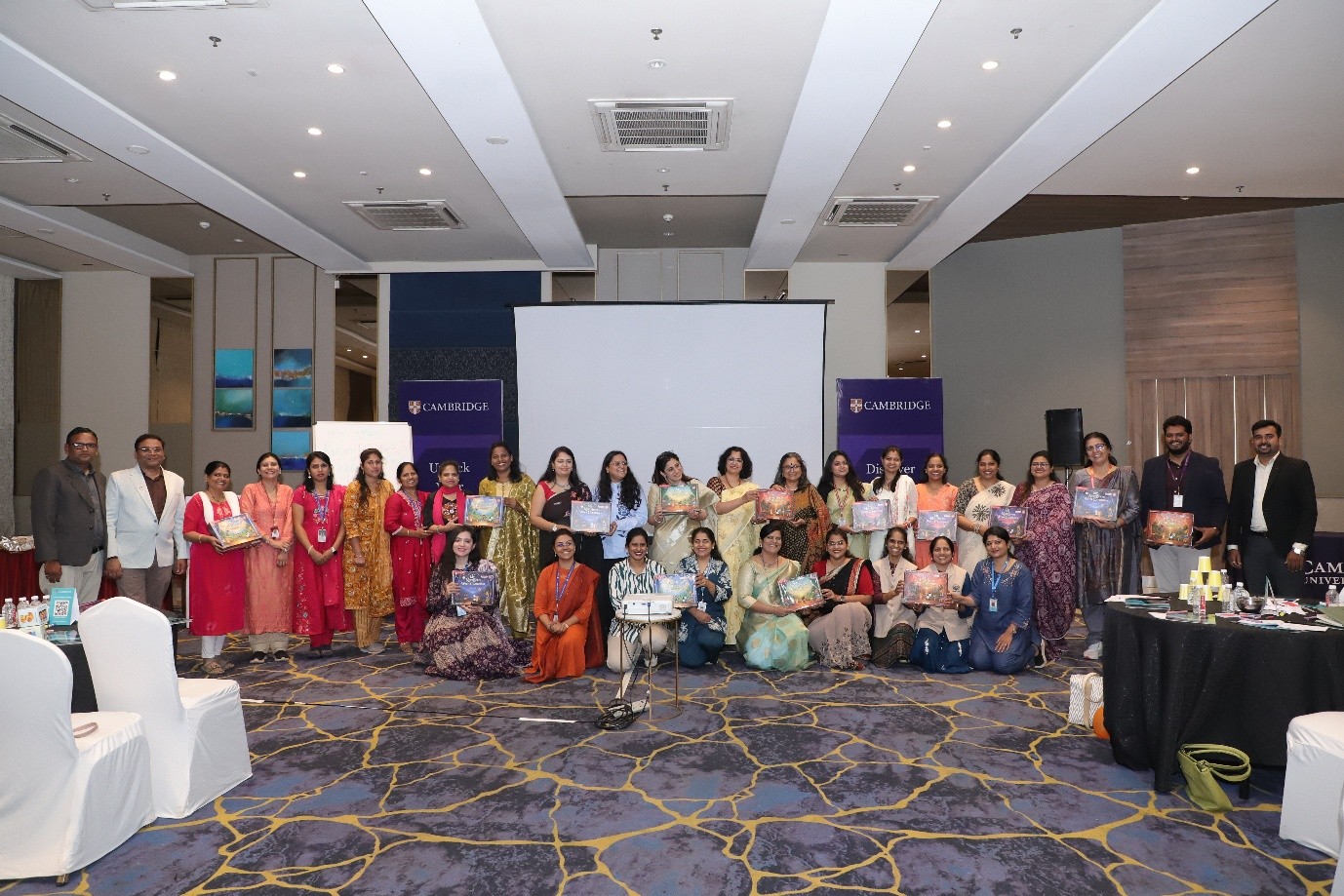
The new series were launched at The Foundation Journey: From First Steps to Future-Ready Learning, an event in Pune attended by school principals, academic coordinators, and teachers. Sonali Nadkarni, Series Editor of My First Steps with Cambridge, and Monika Kacker, Author of My Next Steps with Cambridge, led sessions on child-centred pedagogy, focusing on nurturing curiosity and independent thinking.
Focus on experiential and purposeful learning
My First Steps with Cambridge covers Nursery to UKG, supporting all-round development, while My Next Steps with Cambridge extends the approach to Grades 1 and 2, building on a whole-child philosophy. The programme emphasises conceptual understanding, critical thinking, and real-world application, aiming to foster independence and confidence in learning.
Vishal Dhawan, Vice President – Schools, South Asia, Cambridge University Press & Assessment, said the resources are designed to help educators create purposeful and engaging learning experiences that encourage exploration and lifelong learning.
Sonali Nadkarni highlighted the importance of observation, exploration, and discovery in early childhood, stating that meaningful early learning involves opportunities for children to experiment and build confidence. Monika Kacker added that connecting learning to children’s experiences and encouraging independent thought makes education more meaningful and prepares them to apply their knowledge confidently.
Role of play and storytelling
The programme incorporates play and storytelling to create immersive learning experiences. Through play, children can explore ideas hands-on and learn from trial and error, while stories provide context, help build vocabulary, and connect learning to the world around them. Cambridge aims to support schools and educators in fostering foundational skills, curiosity, creativity, and independence in young learners through this connected approach.
Disclaimer: This article is based on a press release provided by the concerned organisation and has been edited for style and clarity with the assistance of AI tools. BusinessFortnight does not verify, endorse, or take responsibility for the claims, figures, or statements made in the original release.

