

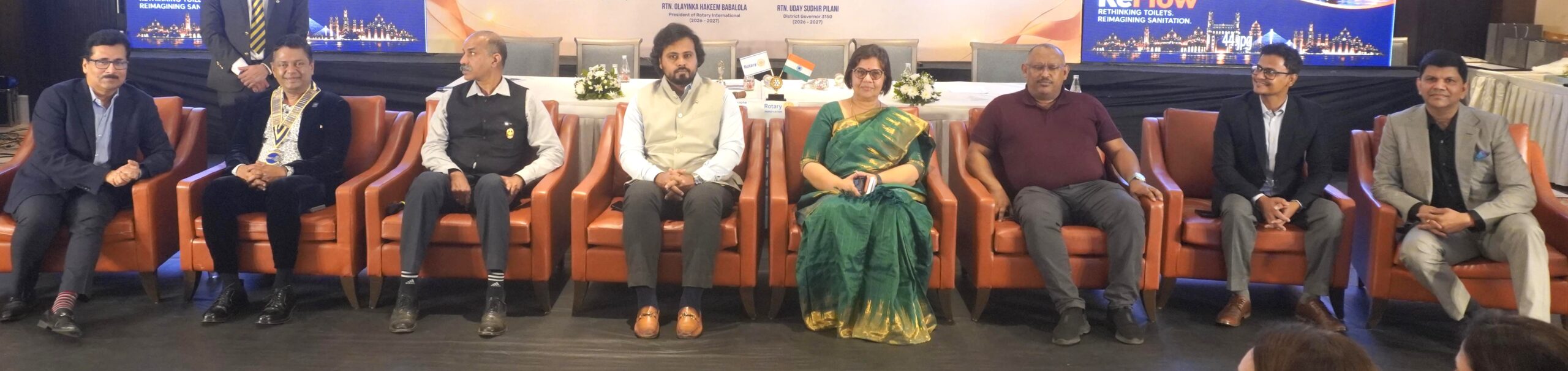
Hyderabad, October 21, 2026: The Rotary Club of One Hyderabad convened a panel discussion titled “Sanitation: A Super Vaccine” at The Leela, Banjara Hills, emphasising the need for investment, innovation, and behavioural change to make sanitation a public health priority.
The event, held on the eve of the club’s Charter Presentation Ceremony, brought together experts who called for collective responsibility, affordable technologies, and wastewater recycling to address sanitation challenges in India.
Panel highlights need for clarity and responsibility
Dr. T. K. Sridevi, IAS, Secretary, Municipal Administration Department and Commissioner and Director of Municipal Administration (CDMA), Government of Telangana, noted that while cleanliness is widely valued, ambiguity over responsibility often sidelines sanitation efforts. She referenced Mahatma Gandhi’s advocacy for sanitation during the freedom struggle and observed that economic growth has historically taken precedence over sanitation since Independence. Dr. Sridevi called for a shift away from the “flush and forget” mindset, urging greater investment and sustained behavioural change, and highlighted Rotary’s role in raising awareness.
Sanitation as a preventive measure
Dr. Zelalem Birhanu Tafesse, Chief of Field Office, UNICEF India, described sanitation as a “super vaccine” that can prevent illness and protect communities, similar to the role of vaccines. He cited Rotary’s contribution to the global fight against polio, noting that in Uttar Pradesh and Bihar, Rotary facilitated over 7,000 volunteers to support public health initiatives.
Innovation and decentralised solutions
Vivek Pandey, WASH Professional and Consultant to the Gates Foundation, highlighted the stagnation in sanitation technologies over the past 160 years and advocated for decentralised wastewater treatment. He pointed to the ReFlow Model toilet at Lumbini Park, Hyderabad, as an example of on-site wastewater treatment and reuse, reducing reliance on conventional sewerage systems and conserving freshwater.
Sanitation’s impact on development goals
Rohit Chandragiri of the Foreign, Commonwealth & Development Office (FCDO), British Deputy High Commission, stated that sanitation directly or indirectly affects 130 out of 169 United Nations Sustainable Development Goal targets. He stressed that sanitation influences public health, clean water access, gender equality, education, environmental protection, and human dignity.
Residential communities and sustainable practices
Girish Mallpani, Chairman and Managing Director of MPM Group, urged Resident Welfare Associations to prioritise effective effluent treatment plants and wastewater management in residential projects. He advised homebuyers to inquire about builders’ wastewater treatment plans in addition to amenities, emphasising that responsible wastewater management is integral to sustainable development.
Col. M. Chandan Kumar, Head of Engineering at T-Works, discussed the need for affordable and scalable sanitation technologies and called for bridging the gap between innovation and widespread implementation.
District Governor Uday Pilani, Rotary District 3150, reiterated Rotary’s commitment to mobilising collective action for sanitation, highlighting the need for public awareness, behavioural change, and collaboration among government, industry, civil society, and communities.
The panel concluded that a comprehensive approach—combining infrastructure, technology, wastewater recycling, behavioural change, and institutional collaboration—is essential for sustainable progress in sanitation.
Disclaimer: This article is based on a press release provided by the concerned organisation and has been edited for style and clarity with the assistance of AI tools. BusinessFortnight does not verify, endorse, or take responsibility for the claims, figures, or statements made in the original release.

